Burlington's 2026 housing market sits between Hamilton's affordability and Oakville's premium, with an average detached price around $1.36M and a median condo price near $625,000. Buyers pick Burlington for its lakefront downtown, top-25 RAHB-area schools, and a 50-minute GO Lakeshore West ride to Union Station. This guide walks through every neighbourhood from Aldershot to Brant Hills, what you'll pay, and how to read the market in 2026.
The Burlington market in 2026 — what the numbers say
Burlington is reported by the Realtors Association of Hamilton-Burlington (RAHB), and March 2026 board data shows 1,180 active listings, average days on market of 32, and a sales-to-new-listings ratio near 51%. That puts the city in balanced-to-slight-seller-favoured territory.
The average detached price of $1.36M is roughly 17% above pre-pandemic 2019 levels, after a peak-to-trough swing of -22% between February 2022 and December 2023. Townhouses average $895,000 and condos sit around $625,000, with the Brant Street downtown highrises (Bridgewater, Saxony) commanding the largest premium per square foot.
The OSFI mortgage stress test continues to qualify Burlington buyers at the contract rate plus 2% or the 5.25% benchmark, whichever is higher. With 5-year insured fixed rates around 4.69% in spring 2026, qualifying income for a $1.36M detached purchase with 20% down is approximately $245,000 — a real constraint for many move-up buyers from Hamilton.
If you're comparing Burlington against other RAHB-region markets, check our monthly market updates or run a personalized scenario with Ask Zara.
Neighbourhood-by-neighbourhood breakdown
Burlington is best understood as five distinct sub-markets divided by the QEW, the 403, and Brant Street. Each has its own price band, school catchment, and commute pattern.
Aldershot
Aldershot is Burlington's westernmost community, bordering Hamilton near LaSalle Park and the Royal Botanical Gardens. Detached homes average $1.05M-$1.45M, with waterfront LaSalle properties pushing $2.4M+. Aldershot GO Station offers 47-minute Union Station trips and is also a key transit point for McMaster commuters. Local catchment includes Aldershot HS and Tom Thomson PS.
Downtown / Brant Street corridor
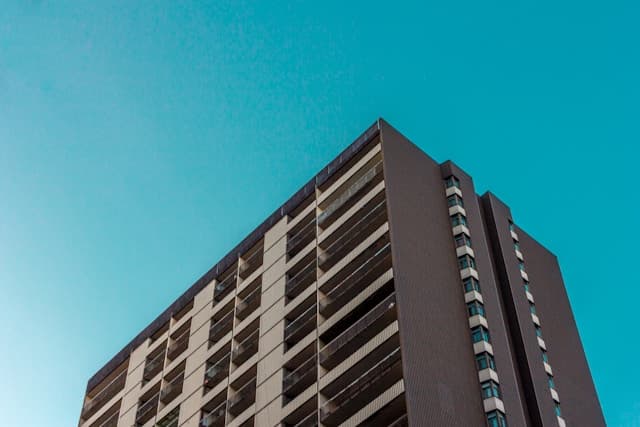
The Brant Street corridor from Lakeshore Road to Caroline Street is condo-dominant, with buildings like Bridgewater Residences, The Berkeley, and Saxony 1+2. Premium 1-beds run $625k-$745k; 2-beds with lake views push $1.05M-$1.45M. The Burlington Performing Arts Centre, Spencer Smith Park, and the Lakeshore waterfront promenade are walking distance, and Walk Score downtown is 88.
Roseland and Shoreacres (South-East)
South of the QEW between Walkers Line and Burloak Drive, Roseland and Shoreacres are mature, tree-lined neighbourhoods with the highest detached prices in the city. Average detached: $1.85M-$2.6M, with custom builds on Roseland and Shoreacres Drive pushing $4M+. Catchment includes Nelson HS and Tuck PS, both top-quartile in the Halton District School Board.
The Orchard, Alton Village, Headon Forest (North)
North-Burlington family neighbourhoods sit between Upper Middle Road and Dundas Street. Alton Village (built 2003-2014) is townhouse-heavy at $785k-$985k and 2-storey detached at $1.15M-$1.4M. The Orchard offers larger 4-bed detached homes at $1.25M-$1.65M. Hayden HS and MM Robinson HS are the secondary catchments.
Brant Hills and Mountainside
These are the entry-level pockets. Mountainside semis and townhouses run $720k-$895k; Brant Hills detached starts around $985k. Commute is via Highway 407 ETR or QEW, and Burlington GO is a 10-minute drive.
Map shoppers can browse Burlington listings by neighbourhood, or get a free instant home valuation on your current home before shortlisting.
What it costs to buy a Burlington home
Burlington buyers pay only the Ontario Land Transfer Tax — the City of Burlington has not adopted a municipal LTT. On the average $1.36M detached purchase, Ontario LTT works out to approximately $22,475. First-time buyers can claim up to $4,000 in rebate.
- Legal fees: $1,950-$2,800 including title insurance and disbursements.
- Home inspection: $550-$850 depending on home size and foundation type.
- Mortgage default insurance: CMHC, Sagen, or Canada Guaranty — required on under-20% down, premium ranges 2.8%-4.0% of mortgage amount.
- Property tax (2026): blended City of Burlington + Halton Region + education rate ~0.81% — about $11,000/year on a $1.36M home.
- HST: applies on Mattamy and Branthaven new builds in north Burlington and Alton Village; the federal new housing rebate clawback eliminates the rebate above $450k pre-tax.
Out-of-country buyers pay the 25% Ontario Non-Resident Speculation Tax (NRST) on top of LTT. Permanent residents, citizens, and certain work-permit holders are exempt or eligible for rebate.
Commute, transit, and lifestyle
Three GO Stations — Aldershot, Burlington, and Appleby — connect Burlington to Toronto Union on the GO Lakeshore West line. Peak trains run every 15-20 minutes; off-peak service is 30-minute headway. Union Station travel time is 47-58 minutes depending on station and time of day.
Drivers use the QEW (eastbound to Mississauga/Toronto, westbound to Hamilton/Niagara), the 403 (north to Brantford and Highway 401), and the 407 ETR (paid express). Highway 6 connects Aldershot to Guelph and the Hamilton airport.
Lifestyle features include 27 km of waterfront trails, Bronte Creek Provincial Park, the Royal Botanical Gardens, Joseph Brant Hospital, and Burlington Mall. The annual Sound of Music Festival and Ribfest draw 200,000+ visitors to downtown each summer.
Buying and offer strategy in Burlington
Burlington's offer dynamics depend heavily on neighbourhood. South-of-QEW listings still see multiple offers about 40% of the time; north-Burlington and Aldershot have shifted to single-offer negotiated deals on most listings.
- Use a 90-day rate hold from a Schedule I bank or independent broker before shortlisting.
- Order a status certificate on any condo offer — your lawyer reviews the reserve fund, recent special assessments, and pending litigation.
- Build in conditions where you can: in balanced markets, financing and inspection conditions are reasonable and not deal-killers.
- Watch the QEW noise corridor: homes within 300m of the highway take a 3-7% discount; check window upgrades and HVAC filtration.
- Verify school catchment with HDSB's Find My School tool — boundaries change.
For deeper offer-strategy tactics, see our buying guides, and use Ask Zara for live comparable-sales analysis on any Burlington address.
Rental and investment dynamics
Burlington rents are RTA-governed with the 2026 provincial guideline at 2.5%. Average asking rents (Rentals.ca + CMHC, Q1 2026):
- 1-bed downtown condo: $2,150-$2,395
- 2-bed condo (Brant or Lakeshore): $2,750-$3,200
- 3-bed Alton Village townhouse: $3,250-$3,650
- 4-bed Roseland detached: $4,500-$5,400
Gross cap rates run 3.5%-4.2% — slightly better than Oakville but tighter than Hamilton. Many investors target downtown condos for principal paydown and long-term appreciation rather than cash flow. Investors should review the For Landlords resource for tenant-screening and N4/L1 enforcement under the LTB, or browse Manage Rentals if outsourcing.
Frequently asked questions
Is Burlington a good place to buy in 2026?
Burlington offers a strong balance of lifestyle, schools, and commute access at prices roughly 28% below Oakville and 22% below Mississauga. With 2026's stabilized rates and balanced inventory, buyers have more leverage than they did in 2021-22 but less than in late 2023. The city's GO Lakeshore West connection, top-quartile HDSB schools, and Lake Ontario waterfront make it especially attractive to move-up families and downsizing empty-nesters. Investment cap rates are tight but appreciation has averaged 6.3% annually over the past 15 years.
What is the cheapest neighbourhood in Burlington?
Mountainside and Brant Hills offer the lowest entry prices, with semis and townhouses starting around $720k and detached homes from $985k. These are mature 1960s-1980s pockets just north of the QEW, served by Burlington GO and within 15 minutes of downtown by car. Aldershot is the second-cheapest detached neighbourhood, with semis from $850k. None of these areas are bargains by Hamilton standards, but they are 25-35% cheaper than Roseland or Shoreacres for similar square footage.
How does the OSFI stress test apply to Burlington buyers?
Every federally regulated lender must qualify a mortgage applicant at the higher of (a) their contract rate plus 2% or (b) the 5.25% Bank of Canada benchmark. In Burlington, with 5-year insured fixed near 4.69%, qualifying rate is 6.69%. On a $1.36M home with 20% down ($272k), the borrower needs roughly $245,000 household income to qualify, assuming no other debt and $3,500 monthly housing costs. Credit unions provincially regulated may use looser qualifying — check our mortgage financing guides for details.
Can I add an Additional Residential Unit (ARU) in Burlington?
Yes — the City of Burlington allows up to three units per residential lot under Bill 23 and the city's ARU framework, subject to building permits, zoning compliance, fire-code separation, and parking minimums. The application path includes a zoning certificate, building permit, and electrical inspection. Once tenants occupy the unit, the RTA governs, and the 2026 rent guideline of 2.5% applies to pre-Nov-2018 units. Unpermitted secondary suites are common in Aldershot and Mountainside but expose owners to enforcement and insurance risk.
What's the property tax bill on a $1.36M Burlington home?
Burlington's 2026 blended residential rate (City + Halton Region + education portion) is approximately 0.81%, producing a property tax bill of about $11,000 per year on the average $1.36M detached. Bills are issued twice annually with most owners on monthly pre-authorized payment. This rate is materially lower than Hamilton (~1.30%) and slightly higher than Oakville (~0.79%). The municipal portion funds parks, transit, libraries, and roads; the regional portion funds policing, social services, and water/wastewater.
Key takeaways
- Burlington is the Halton value play. Detached averages $1.36M — about 28% below Oakville.
- Five sub-markets, five price bands. South-of-QEW Roseland/Shoreacres lead; Mountainside and Brant Hills are entry-level.
- Three GO stations on Lakeshore West. 47-58 minutes to Union Station.
- Property taxes are mid-pack. ~$11,000/year on a $1.36M home at a 0.81% blended rate.
- Balanced market dynamics. 32-day average DOM, 51% sales-to-listings ratio.
- ARUs are permitted. Up to three units per lot under Burlington's Bill 23 framework.